UX Design & User-Centred Interfaces
Software nobody uses is worth nothing. We design interfaces your teams actually adopt.
The problem we solve
Complex interfaces don't just frustrate your users — they cost money. Unnecessary clicks, endless training sessions, creative workarounds: every invisible friction in your software is a real productivity loss.
The vast majority of users abandon a tool because of poor experience. In a B2B context, every resistant user represents a software investment that never pays off. We design interfaces that eliminate the learning curve and make action feel natural.
What we do
- UX audit of your existing interfaces (heuristics, user journey analysis)
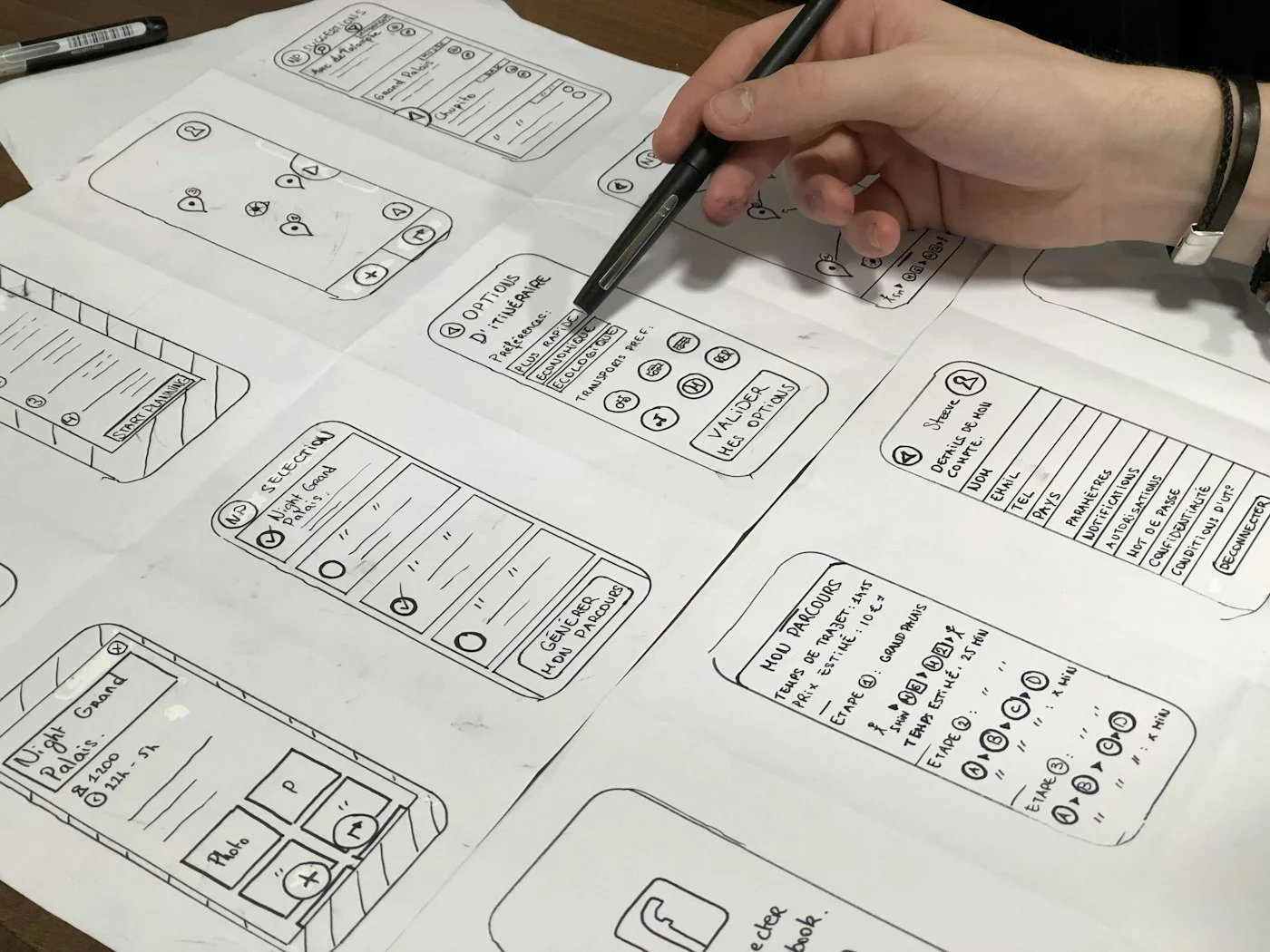
- Low and high-fidelity wireframing and prototyping
- User testing and journey validation before development
- Responsive interface design (desktop, tablet, mobile)
- Design systems and reusable component libraries
- UX support throughout the development lifecycle
Blueprint first, code second
Changing an interface after development costs ten times more than before. Our wireframes are digital architect blueprints: they let all stakeholders validate the behaviour before a single line of code is written.
Low-fidelity first — to explore without committing — then high-fidelity to validate every interaction. Design answers "does it work?" before asking "does it look good?"
- Rapid exploration of multiple solutions
- End-user validation before development
- Unambiguous stakeholder alignment
- Risk reduction at every stage
We measure. We adjust. We repeat.
An interface is never "finished". We instrument every project to measure the real-world effectiveness of the interfaces we produce, then continuously adjust based on field feedback.
What percentage of your users complete a key task without help or error?
How often do users make mistakes, go back, or abandon an action?
How quickly does a new user become autonomous? We aim to reduce it with every iteration.
Features used versus features available reveals what works — and what needs to be simplified.
An interface your teams will actually use
Start with a UX audit of your current tool. We identify friction points and propose concrete improvements.
Request a UX audit